Friday, March 29, 2013

To Tibet with love from Spain

Terry Reis Kennedy
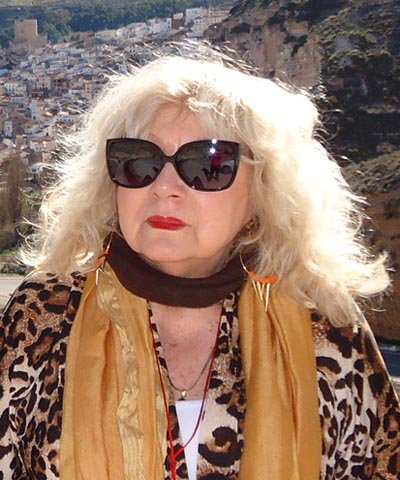
Terry Reis Kennedy  photo by Ana Felipe
 
By Terry Reis Kennedy
By email, 28 March 2013
It was a great experience for me to visit Spain for the first time. I found it a mysterious country, with such a welcoming attitude towards strangers, yet a deep sadness that permeates the atmosphere, a country only relatively recently freed from the tyranies of war and bloodshed. I admire the spirit of the people who do not seem to wilt despite the hardships that they are undergoing right now, with the “Crisis” as they refer to their financial depression.
While here, I was invited to read poems from my book, I Am Tibetan, which chronicles stories that have been narrated to me by Tibetans living in exile in India, my home. It was in the village of Puttaparthi, India, that I made my first Tibetan friends 23 years ago, and it was through them that I learned about His Holiness the 14th Dalai Lama, Tibetan Buddhism, and the tragedy of the destruction of Tibetan monasteries, the slaughtering of thousands, and the diaspora of the Tibetan peoples caused by Chinese invaders under Mao Tse Tung.
The groups of Spanish people that I shared the story with, and who heard the poetry, were very moved. They told me that they did not know about these events, that they were not in their history books and not in the media. They had sometimes seen images of monks on fire but did not really understand what was happening in the approximately 30-second clips.
From I Am Tibetan:
I am Tibetan because the blood of the martyrs of Tibet spilled
into my hard heart and made it soft.
I am Tibetan because in our tent in Bodh Gaya,
the prayers of the refugees
to Buddha, to the deities, to the mountains, to the sky,
and to the clouds reached my ears.
I am Tibetan because the tears they cry for their Mother Land
fall out of my eyes.
We might think most people know about Tibet, but in my travels I have not found this to be true. It is necessary, therefore, to continue to carry the message: FREE TIBET, wherever we find ourselves, and to keep it in the consciousness of those around us.
Heartfelt wishes were expressed by the audiences that Tibetans would be able to return to their homeland, that the imprisoned Tibetans would be set free, and that there would be no more blood shed on the holy land of Tibet, the rooftop of our world.

About the author

Terry Reis Kennedy is a poet and writer who lives in Bangalore, India. You may contact her at treiskennedy(a)gmail.com and read her blog.
Copyright © 2013 Terry Reis Kennedy Published in Tibet Sun Posted in Opinions » Tags: , ,

Wednesday, March 13, 2013

REPORT FROM VENEZUELA


REPORT FROM VENEZUALA by Faith, correspondent for Terry´s Blog.

To tell you the truth, I am very sorry about Chavez because I love him very, very much.  You know I never got involved in politics.  But, when I came here, some friends invited me to their house (this was back in 1998) and they were watching a show where they were interviewing the candidates. And I also watched since there was nothing else for me to do there.  So... as I watched I asked Our Lord, out of sheer curiousity:  "Oh, Lord, I wonder which one is the best for the job. " Just talking to Him.  And, Chavez was the last one to be interviwed, and after about 10 minutes after the interview started, Our Lord said to me the following: (He had only talked to me 3 times in my whole life) "This is the one I have chosen for this job, join him and help him in any way you feel."  So, I did, but, not directly because I had no contact with him.

It is true that Nicolas Maduro and his wife are Sai Baba devotees.  I mean I read that they had been to Puttaparthy to see Baba.  I do not know how much of a devotee he is, but, I have heard that his wife really is.  I like him very much and especially since Chavez appointed him as his vice president and just before he became so ill, he gave us all a message to support Nicolas.  I went to see Chavez from where I live by airplane.  Because of my age, they let me in to see him without having to stand in those lines for hours.  There are people who have stood in line for about 13 or 15 hours.

 There are millions of people from all over the country to see him, and maybe even from different  countries.  The presidents of about 20 countries from all over the world came to see him in his coffin.  People are just flooding here to see him.  He was a very, very dedicated man.  Dedicated to the welfare of poor people who had always been treated like dirt.  And, no politician or president of this country ever did anything for them.  They lived in very, very horrible places and also very, very precarious places.  He built so many, so many houses for so many of those poor people.  Beautiful, beautiful houses.  He made it possible for them to go to school, high school and even college.  He made them feel like somebody and was always talking about God.  That it why so many, many people love him all over the world, and especially here.

  I love him very, very much and he said to support Nicolas Maduro and I do, spiritually, of course, and if someone asks for my help for him, I will gladly do it because Chavez was preparing for the last 12 years and made him his vice president.  So, I am very, very happy that he is now the temporary president until the elections, which will be within a month of two.  The exact date has not been decided by the Department in charge of the votes, etc.  But, I have heard that it will be around the beginning of April.  Anyway, i will let you know.

  Oh, by the way, Chavez came from a poor family but was educated, of course.  And, Nicolas was a bus driver.  So Chavez was and Nicolas is very knowlegeable about the poor people´s needs and of course, they are not against rich people, but rich people can take very good care of themselves, and they always ignored and put down the poor people, who deserve to live well also, and that is what Chavez did and Nicolas will be doing.  Of course the rich people need poor people around, so they can feel that they are better than someone else.  And, that is the whole thing that is happening.  I feel very, very strongly that Nicolas will win the elections and will continue with the same work since Chavez prepared him very well for that.

So, i guess now you are more well informed than you were before and I hope you come and see all the wonderful things Chavez did for the poor people and that Nicolas will be doing for them also.  I mean these were people many of whom had never even gone to school in their lives and they have even reached high school and many of them college.  And, they love Chavez so much, that is that they are very grateful which not many people are when someone gives them something.  So, many times it has brought tears to my eyes to see how much Chavez did for them and how they appreciate it and how much they love him.  I mean, can you imagine them waiting on line 10, 12, 13, 15 hours?

 As I said before, I even went there by airplane and because of my age and the pain on my back when I stand for more than 10 or 15 minutes, I was let to see him in a shorter period of time, but I was there and I walked at least 4 miles to go see him.  I had never seen anyone in a coffin that looked so alive in my life.   There was a lot of light around him.  And, millions of people love him so much (including me, even though I am not Venezuelan legally, but I am at heart).

Anyway, i hope now you know enough about him and what a wonderful human being he was and still is.  He believed in :Total surrender to God and his duty.  Everyone can feel his energy all around.

Faith

Friday, March 8, 2013


Letter Home

By Terry Reis Kennedy


My flight from Bangaluru Airport in India to Doha, the capital city of Qatar, where I am scheduled to stop and change planes for an onward journey to Madrid is smooth and relaxing until suddenly the captain announces that due to atmospheric conditions of blinding fog we have been unable to land and we are running out of fuel.  A collective groan fills the silence.  Then the captain says that we will divert from our scheduled route and go to the Kingdom of Bahrain to refuel.  We do this successfully, but by the time we reach Doha again, most of us have missed our connecting flights.

On landing, Qatar Airways staff announces that we will be given luxury accommodations during a 12-hour delay while our rescheduling is planned.  What an adventure begins. The city is a brilliant diamond encrusted topaz that pulls me right into its beauty.  For instance, it is the cleanest place I have ever visited—cleaner even than Switzerland! It is dotted with high-end European designer shops and boutiques as well as low-end ventures such as MacDonald’s and Dairy Queen.  Apparently, the one percent enjoys cheap eats just as much as the 99 percent.

Cars, all glowing and looking brand new move silently over roads as astonishingly smooth as marble floors.  Soon, I am in a nest of luxury at one of the city’s most exquisite hotels.  In the main dining room, after a long, hot soak in a bathtub big enough for two I am ready for lunch. I meet and commune with my fellow travelers who are thoroughly enjoying the magnificent spread, an entire room just for the food.  The exotic Middle Eastern cuisine is wonderful.  Bright greens on the salad table, every kind of fruit, and vegetables cooked to perfection, and my favorite dessert, a Doha confection made with rose petal essence syrup and whipped cream covered with crunchy baked grated coconut.

The coffee is robust and my body responds as if it being reborn.   I fall in love with Doha—the conviviality of the people is contagious; and soon the guests from our flight are feeling like family at a holiday feast.  We move around the dining tables introducing ourselves to each other.

Sister Rena of the Order of St. Joseph of Alisi (headquartered in France), originally from Kerala, India is on her way back to Tanzania Africa where she works as a nurse in a tiny clinic in the midst of some of the poorest people in the world. “They live on cabbages and maize, she explains with only drips of water.  They cannot even wash the clothes.”  Sister says that most of the supplies sent to the clinic from Europe disappear.  “They are robbed by corrupt politicians,” she insists. 

“The other four sisters and myself don’t sleep much at night.  We lay awake in fear that we will be shot to death.”  With a huge smile on her young and pretty face, Sister Rena says, “Men come to kill us sometimes.  They have long shot guns and hate in their eyes.”  I do not speak about the rapes they often commit, according to reports, before they gun down their victims.

“Thank you, Sister,” I whisper for I have lost my loud American voice— “Thank you for your courage, for your faith, and for your loving service to the poor.”  I am choked up with joy in my heart—here in the Paradise that is Doha.

I meet up with the ten Spaniards from Pamplona who helped me at the airport Transfer Desk when we landed.  They are exuberant and enjoying the food fit for the mighty sheiks of Arabia who look impeccable in their long white gowns and head scarves. When you are in their homeland, there is no question who rules the mundane world. Political analysts talk about the upcoming super powers like China and India, but few seem to be watching carefully the massive displays of wealth in tiny Qatar.

The Spaniards had travelled to India to work at Mother Teresa’s Sisters of Charity organization in Kolkata (Calcutta) and they volunteered there as bathers of dead, unclaimed bodies found on the city’s streets daily.  They said that the type of service they did there for three weeks is greatly needed and they vow to come back again to help.  They are infused with passion as they speak and it is obvious that the reward of helping others is already multiplying.  What they came to give—love, for example, has been increased a hundred fold in their own hearts.  They move about the dining room blessing us with their presence.

Before long, Michal Malinowski joins me at a table.  He is a robust, 46-year old international story teller from Warsaw, Poland.  He had been in India gathering research for an event he is producing, “The Chocolate Revolution,” he explains.  It will target a young audience, children and teenagers, but he says he hopes that it will be a consciousness raising event for people of all ages and faiths around the world. His shoulder-length curly brown hair bounces as he talks about the project. 

Meanwhile, in the middle of the desert we quench our thirst with wine glass after wine glass of pure, still water.  Alcohol is not allowed in Doha, or anywhere in Qatar, and consequently 95 percent of the problems associated with it simply do not exist.  You can walk the streets at midnight, alone, as many of us did—unafraid.  Imagine it.  It does exist—peace and more peace in the midst of a chaos all around the globe.

Michal tells us how he developed the concept for “The Chocolate Revolution”.  He explains that he had once listened to an ancient (Confuscian) story that has circled the globe.  It’s about people at huge, long tables filled with the most delicious foods who could not eat anything because they had only large and very cumbersome spoons (chop sticks) that they could not comfortably use to feed themselves.  The narrator of that ancient story had explained, “This is Hell.”

Later, he went to Heaven and there was the very same table, the very same, food, and the very same utensils.  But everyone in Heaven was content and at peace.  Michal explains, his bright eyes twinkling, “The people who lived in Heaven had learned to use the instruments to feed each other, rather than themselves.”

This message of loving others and co-operating and helping them is what Michal will share with the presentation of the productions associated with “The Chocolate Revolution”—the launch of a new way of using non-violent methods to produce world awareness that we are all “One”.

How did you develop this kind of thinking?  I ask him. 

“Through my mother, Maria,” he says.  She was an engineer in a chemical factory when I was growing up in then Russian-communist-occupied Poland.  She had become a follower of Sai Baba, an Indian guru, and she practiced his teachings on loving all and serving all.  She had always wanted to go to India but could never manage to do so and now she is not in good health.  But even at the age of 76, she still hopes to visit the ashram and resting place of the late Avatar.

Michal invites me to Warsaw for the debut of “The Chocolate Revolution”.  I had worked in Warsaw during the height of martial law there in 1982, gathering stories about the Solidarity Revolution that was going on at that time.  Lech Walesa, who later became President of Poland, got all the workers of Poland to collectively sabotage the communist projects that were keeping Poland in the grip of an out-moded thought form—slavery and subservience of the masses for the benefit of the self-anointed few—according to my personal observations.

I will be there, I promise Michal who had originally been surprised to hear me speak in Polish—learned from my immigrant Polish grandmother, Victoria Szysko, in the foothills of the Green Mountain state of Vermont.

Reconnecting with Poland and people I have met from there will be wonderful.  In fact, I will stay in Gdansk, I explain, where fellow writer Mata Dziewieka lives and teaches.  Mata has translated many of my poems into Polish and into Spanish as well.

It’s time!  This is the moment we have been working toward—global harmony.  Call it “The Chocolate Revolution” or the Second Coming, or just plain waking up and realizing we are not just instruments of God, but that we are the Divine Principle in action ourselves.

Leaving Doha, I am full of appreciation for so many new friends.  After a tranquil sail through the night skies, I watch the sun rise over Madrid as we approach Baharajas Airport.

I look forward to my work in Spain. And now, here in the cozy home of my hosts, Ana and Manolu, I am seated at a desk in a lovely office surrounded by books and windows that look out onto the red-tiled rooftops of the gentle city of Albacete.  From here I send the love I have been touched with.  May it multiply and spread joy to all.

To learn more about The Chocolate Revolution please contact Michal Malinowski at muzeumbajek@wp.pl   orwww.ted.com  or www.ted.org.

Terry Reis Kennedy is a poet, writer, editor, and publisher.  She is in Spain to work on a screenplay and to speak about the plight of the Tibetan people who lost their country when communist China, under Mao Ze Dong, invaded and occupied it.  She can be reached at treiskennedy@gmail.com
Doha city 008 state of Qatar.JPG

Friday, June 22, 2012

Thanksgiving at Auschwitz


Thanksgiving at Auschwitz

By Terry Reis Kennedy

It was Thanksgiving in the USA. But in Poland no one was feasting. It was the height of Martial Law there in 1982 and I had come to the country to witness and to write about the war atmosphere, the lack of basic food supplies, and to search for Lech Walesa, the leader of the Solidarity Movement which was gaining worldwide recognition as a force that was usurping the Communist regime.

The sun was out. The leaves of the trees were gold and rust and umber. But the air was cold, as cold as a mortician’s storage vault. I didn’t like the feel of it.

As the car chugged closer and closer to Auschwitz, I felt queasier. I wished I hadn’t decided to visit the death camp. I wished I didn’t personally know people who insisted there was no such thing as the Holocaust. Long ago, though, I’ d promised myself I would—because so many of my Polish relatives had died there—exterminated like mice in a laboratory. And I wanted to gather evidence to hand over to the non-believers—a baby skeleton, at least, something to open their minds just a fraction—to let the light of Truth seep in.

In my own way, I wanted to pay my respects, not just to my ancestors, but to those millions of other souls whose last human groans were uttered there. I wanted to give thanks, to acknowledge the sacrifice, to say the degradation, the humiliation, the mutilation, the annihilation were not in vain. Silently, alone, on the threshold of some anonymous cell, I’d pictured myself admitting that the world had learned its awful lesson. Never, no never again, would man’s inhumanity to man surface.

But how preposterous, I thought. Looking around me was proof enough that my private Thanksgiving would have to wait. As if synchronized by some overseer of the ominous, I began to feel trapped in images of World War II.

Suddenly, as my car approached the outskirts of Auschwitz, increasing numbers of communist paramilitary police—called Zomo Squad troopers—began to appear. These were Polish men serving lengthy or life sentences in prisons, set free to arrest their own mothers, if need be, to keep the might of the communist regime intact. The idea was to let the Polish criminals do the nasty work of the regime.

The Zomo ranks grew thicker as I got closer. A new wave of bodies, seemingly exhumed from the celluloid cellars of Hollywood. Young. Rugged. They carried machine guns on their backs and billy clubs on their hips. I thought their grey, belted uniforms resembled those of Hitler’s SS.

I tried to distract myself with thoughts of the present. Today, back home in Bellows Falls, Vermont, a once thriving paper-mill town on the Connecticut River, but now an impoverished community struggling to stay solvent, I guessed my family was probably still asleep. But, in a few hours my mother’s table cloth with its scenes of Pilgrims and Native Americans would be blotched with gravy stains. Once more the fading Mayflower would hulk in a sea of cranberry sauce, pumpkin pie droppings, and discount store champagne.

For years my mother’s holiday cloths had underlined our happy, unhappy, pathetic, and sometimes apathetic gatherings. Now, 4500 miles across an ocean and light years behind an Iron Curtain, I was keenly aware of those cloths. They waved across my memory like a parade of 4th of July flags and majorettes and senior citizens in V.F.W. hats. For the first time in my life I felt homesick.

Then, without warning, Auschwitz sprang up in front of me. The crow-black iron entrance gates spread like shadows across the baby-blue horizon. I stared up at the inscription over the archway. “Arbeit Macht Frei.” Work Makes Free. I wondered how many of the millions who actually suffered, died, and endured here had entered through these gates. Had my relatives? Had the dry-cleaner worker in my New York neighborhood, the one with the Auschwitz tattoo on her wrist? Had they seen the inscription and recognized the Hitler euphemism for the lie it was. Or had they lied to themselves as they shuffled under its shadows? Had they, like uncounted others, managed to deny the smokestacks of the crematoria spewing black smoke and the stench of burning flesh, even to their own nostrils?

Denial is such a powerful psychological tool. People who believe that the Holocaust never existed rely on denial, perhaps, because to believe that demonic forces are alive and operating on this earth would be too much for them to tolerate. Many have been spoon-fed anti-Semitism from childhood; it has been subtly mixed into their body of knowledge. The will say things like, “Some of my best friends are Jewish,” which actually translates to—all other Jews don’t deserve the special status of best friend. Not even the greatest gurus can wean them from this poisonous view.

I was horrified as I passed under the archway. The immensity of Auschwitz was no longer something to be imagined. Here it was spilling over the country side for miles and miles until it flowed into the adjacent death camp of Birkenau. The site was bigger than the whole town of Bellows Falls, Vermont. According to historians, when Hitler decided to build the death camps in the Polish Village of Oswiecim, he re-named the area Auschwitz. Some say Auschwitz means, “lights out”. Poles however, still refer to the area as “Oswiecim”. I got chills when I learned Oswiecim translates, “that which enlightens.”

And, indeed, viewing the remains of the original buildings instructed me in startling ways. It wasn’t just an awareness of my relatives’ presence. It was more like encountering my own ghost.

For four hours I walked up worn, stone steps and down blood-spattered corridors. Past stacks and stacks of shelves wide as operating room tables, long as coffins, but each one used as a bed for eight. Past piles and piles of hair shaved from prisoners’ heads. Past piles and piles of blankets made from that hair. Blankets not to warm the prisoners, but to warm the bank accounts of those who marketed them.

Later, past piles and piles of crutches, canes, and wooden legs, all salvaged for re-sale, re-use. Heaps and heaps of shoes. Then, unexpectedly, in a mass of brown and back workers’ shoes I spotted on red velvet dancing slipper. I wondered what romantic heart had been slammed into a box car on her way to the last dance.

Beautiful long-ago cousin, Maria, was it you? My beloved Babcha Szysko told me a story once of how you’d heard about the Russian ballerina, Anna Pavlova. How you admired her independence. How you envied her startling talent. How you yearned for just a pinch of her wealth. How you loved to get up mornings and dance in the dawn light of your kitchen before you lit the fires. Before you milked the cows. Before you walked to the well to fill the water buckets. Before you did the wash. Oh, Maria, how you would have cherished such a pair of dancing slippers. Red as the hummingbird’s throat. Smooth as the underbelly of the cat.

Yes, for each romantic heart extinguished, there were 20,000 dedicated others. Shoe by shoe, the future of the universe piled up like logs for the fire. How could I replant dreams? Rebuild whole visions? Just what is it possible to do in retrospect?

Is it accomplishing anything on this frail planet for me to look, really peer through the keyholes of the medical experiment chambers in cellblock 10 and see hundreds of solemn doctors who had taken hundreds of solemn oaths to uphold life, slicing it out of countless wombs? And if I picture myself amid the wailing women of cell block 10 who underwent this sterilization without anesthesia, will it matter? I hope so. I am counting on it.

And I don’t want to forget how I felt when I saw the two by four brick confinement boxes where prisoners who tried to escape were entombed—alive. And I don’t want to stop imagining what each one’s last human thought might have been. Was it, “God forgive them? I hope so. I am counting on it.

I am also counting on myself to forgive myself for what I’ve done to the self of others because there is a bit of Hitler still alive in me, I’m ashamed to say. For I have seen myself interfering with another’s freedom to be and do whatever he chooses. So, until I recognize that when I even think of holding back one man’s freedom, any freedom, I am only holding back my own. Until I see, truly see, that other person as myself, I am getting nowhere.

Silently, alone on the threshold of some anonymous cell, as I promised myself, I gave thanks. What’s more, I told myself I’d work harder at being the kind of person someone descended from these martyrs ought to be. Before I can expect others to change, I must change myself.

As I retraced my steps under the archway to leave Auschwitz, perhaps forever, darkness crept invisibly over the horizon. My shadow stretched in front of me. Long and lean and Amazonian. The trip back to Krakow was swift. Once there, I was happy to see the lighted streets and windowed houses.

In the comfort of my cozy room I felt safe—almost free. Outside, as the temperature plummeted toward zero, I heard the muffled voices of the Zomo squad troopers. I lifted the shade and watched as they headed toward paramilitary headquarters. They didn’t look as frightening as they had earlier in spite of guns and billy clubs. In fact, they sounded like the young men they were. Laughing, joking, their breath making tiny puffs of steam in front of them. For a minute I thought the youngest in the group of six resembled my 19-year old bother. Or was it my son?

Surprisingly, I felt quite at home. What did it matter where I was celebrating Thanksgiving? Bellows Falls, Vermont or Krakow, Poland—this frail planet, after all, belongs to each and every one of us—wherever we may be.

Terry Reis Kennedy is a poet and journalist. She has lived in India for 22 years near the ashram of her guru, Sai Baba. She is the author of five books of poetry, numerous articles and essays and writes regularly for a variety of international publications including India’s Deccan Herald. She can be contacted at treiskennedy@gmail.com